
Fake coin makers are people who create false coins, doing this to trick collectors and get money.
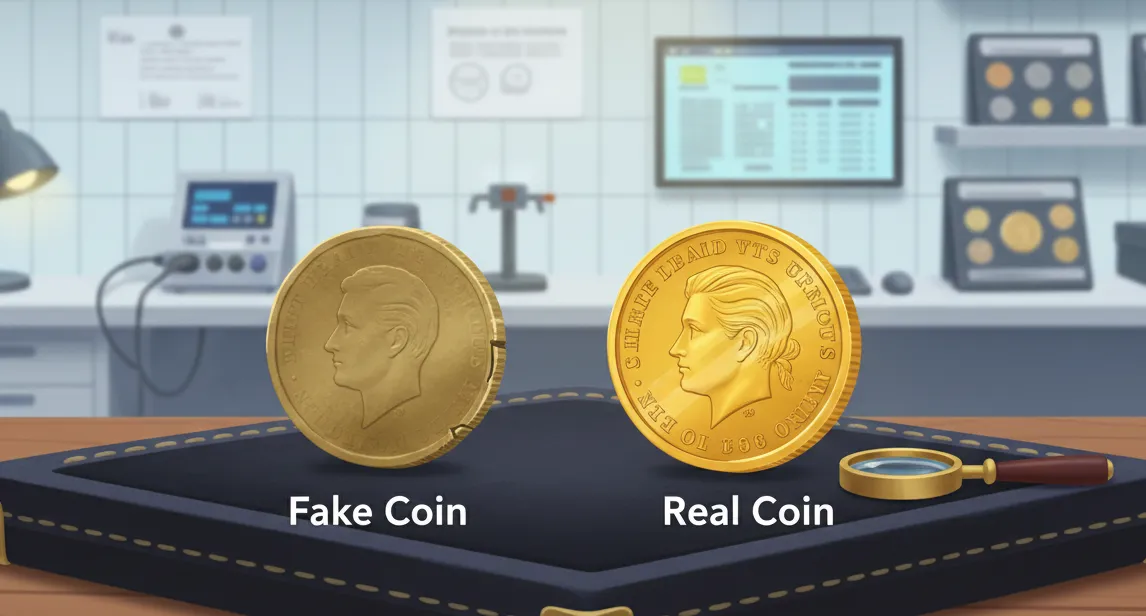
False coins can look much like real ones, making it hard to see the difference without a coin scanner app; sometimes, only an expert can find the fault.
The danger from fakes stands as a big trouble for the coin market.
A collector buying a false coin loses all the money paid for it. If people feel afraid to buy, not being sure the coins are real, the demand for coins falls, making the whole coin market weaker.
The fight against fake coin makers is a work not only for the police but also for experts, strongly changing how collectors and dealers work, giving new rules.

Main Troubles Caused by Fakes
False coins cause many troubles for all people in the market, making trade uncertain.
Money loss, the collector buying a fake coin cannot sell it, losing their money, showing a direct harm.
Trust is going down, having many false coins in the market, people stop trusting sellers and coin sales, causing the general belief to fall.
Prices falling, collectors being afraid to buy a fake, making them ready to pay less for coins without a certificate, lowering the cost.
Hard time for new people, new people just starting to gather coins, finding it hard to know what is real and what is false. They can lose interest quickly because of being tricked, leaving the hobby.
How Collectors Keep Themselves Safe
Collectors, knowing the danger, take steps to stay safe; these steps become rules needed in the market, making trade safer.
Grading
Getting a certificate or checking via a coin value app stands as the surest way to be safe, the coin being sent to a special company that checks it, giving a clear answer.
- Checking the realness, company experts look at the coin, checking if it is real or fake, giving a clear finding.
- Setting the state, giving the coin a clear grade, and showing its condition.
- Putting it in a slab, the coin is put in a special plastic case with a unique number. Slabs are very hard to copy, making the coin safe.
- Being accepted in the market, slabbed coins are selling for more and faster, the buyer being sure about their realness and state, ensuring easy trade.
Buying Only from Checked Dealers
Collectors pick sellers having a good name and giving a money-back promise if the coin turns out to be false, making buying safe.
A dealer being responsible, a good dealer always standing behind the things they sell, taking care of the goods.
Long work history, dealers working in the market for many years, keeping their good name, not wanting to sell fakes, and showing honesty.
Taking part in coin sales, buying at large, known sales, these sales do their own check of the coin, adding a layer of safety.
Looking Closely at the Coin
The collector needs to know how a real coin looks and look for differences, becoming their own first line of defense.
- Looking at small details, real coins have very clear lines, those lines being hard for fake coin makers to copy, showing true craft.
- Checking the weight and size, a false coin often has a wrong weight or size, the makers using a different metal, making it easy to spot.
- Using a strong glass, faults and signs of a fake coin are often only seen when looked at closely, needing a strong glass for the best view.
Growing Role of Technology in the Fight
Technology becomes a new weapon against fakes, helping experts find the false coins faster.
Fact Lists of Fakes
Gathering facts, making big lists and fact files, putting in pictures and words about all found false coins, creating a shared knowledge.
Access for experts, experts use these lists to check a new coin against known fakes, helping their judgment.
Teaching new people, these fact lists help collectors know which fakes exist, raising awareness.
Better Checking Ways
- Metal check, using machines that can clearly find the metal’s make-up. Finding aluminum in an old silver coin means it is a fake, showing the metal’s true age.
- Digital looking, making 3D models of the coin to check against the real one, and helping find even the smallest changes in the shape.
- Scanners, using a special coin identifier app, read the unique numbers on the slabs, making sure the slab itself is not a fake, keeping the container safe.
How the Fight Changes Prices and Demand
The fight against fakes does not just keep things safe; it changes the money side of the market, giving new price rules.
Prices Rising for Certified Coins
Trust making the price, coins having a certificate costing much more than the same coins without one. This extra price is for the safety guarantee, ensuring quality.
Being steady, the prices of certified coins fall less during bad economic times, their worth being sure, giving stability.
Market rule, getting a certificate is becoming the rule for costly and rare coins. Selling an expensive coin without a slab becomes almost impossible, showing the certificate’s power.
Demand Falling for Uncertified Coins
Fear of buying, collectors being afraid to buy rare coins without a certificate, even if they look good, making people unsure.
Big price cuts, coins without a slab selling with a large cut in price, doing this to bring in a buyer ready to take the risk, lowering the value.
Market splitting, the market breaking into two parts: a costly and sure market for certified coins and a cheaper, riskier market for uncertified ones, showing the need for proof.
Role of the Government and Law
Fighting fake coin makers is also a matter of law. The good result of this fight affects the coin market, giving it structure.
- Banning entry, countries can stop the entry of coins looking like fakes, doing this to keep their market safe, and set rules.
- Working together, the police of different countries work as one to find those making and selling fakes in large numbers, catching the wrongdoers.
- Protecting rights, if a collector bought a fake from a large company, the law can help them get their money back, ensuring fairness.
The fight against fake coin makers stands as the main power changing the coin market.
This fight has made getting a certificate the main rule for all costly coins, splitting the market into two: safe and risky.
Collectors can no longer trust only their eyes; they must use expert checks and technology. Slabbed coins cost more because they give a promise.
A buyer wanting to keep their money safe must always buy certified coins, doing this to protect themselves from losing capital and being sure about their collection, making the market strong.
The growing fight against fakes makes coin collecting safer and steadier as an investment, but it needs more knowledge and money from the collector for expert checks.